Natural methods
How to whiten your teeth naturally?
Do you want to whiten your teeth naturally, without harsh products? Several gentle methods help you get your shine back by removing surface stains — as long as you know which ones actually work and which ones damage the enamel. Here is the honest sorting between the real natural allies and the false good ideas.
- Gentle formulas
- Fluoride 1450 ppm
- Shipped from France
What does “whitening naturally” mean?
Whitening your teeth naturally means acting on the surface stains left by coffee, tea, wine or tobacco — not changing the internal shade of the tooth. Natural methods gently polish and dislodge pigments; they restore the teeth to their original colour, without lightening them beyond that. It is effective, realistic and risk-free when done properly.
Conversely, anything that promises teeth “whiter than natural” in a few days is often an illusion — or an attack on the enamel.
The natural methods that work (and those to avoid)
| Method | Verdict | Good to know |
|---|---|---|
| Baking soda | ✅ Effective, use in moderation | Low abrasiveness; 1-2×/week |
| Activated charcoal | ✅ Effective as a top-up | 1-2×/week, no more |
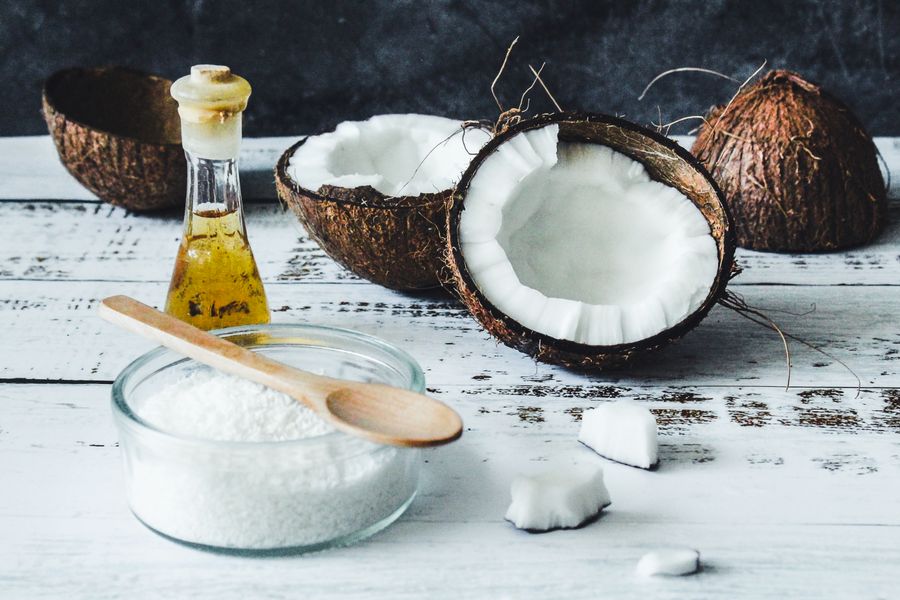
| Coconut oil (oil pulling) | ➖ Mild effect | Comfort and hygiene, limited whitening |
| Diet (water, crunchy fruit) | ✅ Preventive | Limits new stains |
| Lemon / vinegar | ❌ To avoid | The acidity erodes the enamel |
The simplest and most consistent option remains a toothpaste with a natural, gentle formula used daily: the Sea Salt & Baking Soda combines the purifying action of baking soda with controlled abrasiveness, and the Activated Charcoal comes as reinforcement once or twice a week.
The golden rule of natural methods: gentleness and regularity matter more than intensity. An ingredient that is too abrasive, used too often, does more harm (enamel wear) than good.
Our gentle & natural selection
To understand everything, read our complete guide to teeth whitening.
Your questions about natural whitening
Does baking soda damage teeth?
Used in moderation (once or twice a week), baking soda has low abrasiveness and is safe. It is daily use and vigorous scrubbing that can, over time, wear down the enamel.
Does lemon whiten teeth?
No, it is even to be avoided: its acidity demineralises the enamel and makes the teeth more sensitive and, in the long run, more yellow. A classic false good idea.
Does coconut oil really whiten?
Oil pulling mainly improves comfort and hygiene. Its effect on whiteness stays modest: do not rely on it alone to remove marked stains.
Do natural methods replace the dentist?
No. They act on surface stains. For internal discolouration, sensitivity or a gum problem, only a dentist can make a diagnosis and propose a suitable treatment.
In summary
Whitening your teeth naturally is possible for surface stains, with well-dosed gentle methods — baking soda, charcoal as a top-up, good habits — and a natural toothpaste every day. Avoid lemon and harsh abrasives. To choose the formula made for you, take our toothpaste quiz.
See the natural selection